
Subscriber Habits That Move OnlyFans Rankings
OnlyFans has no built-in discovery feed, so subscribers usually find new pages through outside directories. That single design decision explains most of what people call “rankings” on fan sites. Because there is no native search surface, third-party cards carry the weight of matchmaking between creators and the people who pay them. This article looks at the subscriber side of that system: how renewals, spending bursts, chat activity, and exit timing feed the signals that ranking sites like BestOnlyFans measure.
The promise here is specific. Weekly and monthly subscriber behavior shapes which pages climb external ranking cards, and the traffic pattern behind the numbers is more predictable than most people assume. If you understand how your own habits register as data, you can read a ranking card the way its builder reads it.
Why Ranking Sites Exist at All
OnlyFans was built as a hosting and billing layer, not as a marketplace. There is no front-page feed, no trending tab, and no way to browse by category from inside the product. Subscribers arrive because a creator sent them a link, or because they found a page somewhere else.
Ranking sites fill the search space that the platform leaves open. They collect public signals, organize them into cards, and let visitors compare pages side by side. The signals are not secret, but they are scattered, which is why someone has to assemble them.
- No native discovery feed that surfaces unfamiliar creators to new visitors.
- No category directory that groups pages by content type or style.
- No price filter that lets a subscriber set a budget ceiling before browsing.
- No internal recommendation tool that suggests a page based on past subscriptions.
Because the platform stays neutral, the directory layer competes on freshness and completeness. A card that updates weekly tells a different story than one that has not changed since last season.
Renewals as the Primary Ranking Signal
When a subscription continues from one cycle to the next, it tells the platform the page delivered enough value to keep the payment flowing. Ranking sites read continuity the same way, because a page with steady renewals looks stable rather than spiky. A page that keeps eighty percent of its base across six months behaves differently from one that gains and loses the same number of people every month. The first pattern reads as retention; the second reads as churn with a marketing engine attached. Paid subscription prices run from $4.99 at minimum to $49.99 at maximum, though most pages sit between $4.99 and $15, with averages clustering around $5 to $10.
Free pages set the price to $0 and earn through pay-per-view messages and tips instead. A switch from free to paid is its own signal, because it marks a subscriber who decided the page was worth a recurring charge. Promotional first months can dip below $4.99, for example a $3 first month, but the base price cannot. When a creator raises the price, auto-renew stops and existing access lasts until the paid period ends.
| Subscriber Habit | Creator-Side Effect | Card Visibility Impact |
|---|---|---|
| Continuous monthly renewal | Predictable recurring revenue, 80% creator share after the 20% platform fee | Strengthens retention reading on ranking cards |
| Re-subscribe after a lapse | Recovered base without new acquisition spend | Reads as recovering interest rather than decline |
| Switch from free to paid | Conversion from PPV-only revenue to a base subscription | Suggests the page converted a browsing visitor |
| Pause then resume | Temporary dip followed by restored billing | Softens a short gap in the activity record |
| Clustered exit after a price change | Base shrinks until the next cycle stabilizes | Can drop relative position between creators |
- Continuous months of renewal signal retention rather than one-time curiosity.
- Re-subscribing after a lapse shows recovered interest that a single snapshot misses.
- Switching from a free page to a paid one marks a real conversion event.
- Pause-to-resume behavior creates a temporary gap that later closes.
PPV Unlocks and Chat Engagement
Renewals are slow signals. They arrive once a month and say little about what happened in between. PPV unlocks and paid chat fill that gap, because they register within minutes of a subscriber decision. A ranking card that only tracked renewals would miss most of the week-to-week movement.
PPV messages unlock for up to $50 each, and paid chat commonly runs $3 to $5 per message. Tips can reach $100. These are optional spends on top of the base subscription, which means they measure something different from renewal: not commitment to the page, but engagement with a specific moment.
- PPV unlocks up to $50 signal active interest in specific content.
- Paid chat at $3 to $5 per message signals ongoing conversation.
- Tips up to $100 signal discretionary goodwill beyond the base price.
- Message reply rate signals whether the creator is present or absent.
If a page suddenly changes its PPV pricing or chat rate, treat that as a signal in itself. Spending shifts usually show up on the earnings side before they show up anywhere else, and the change often precedes a wider update to the page’s card.
Exit Waves and Card Reordering
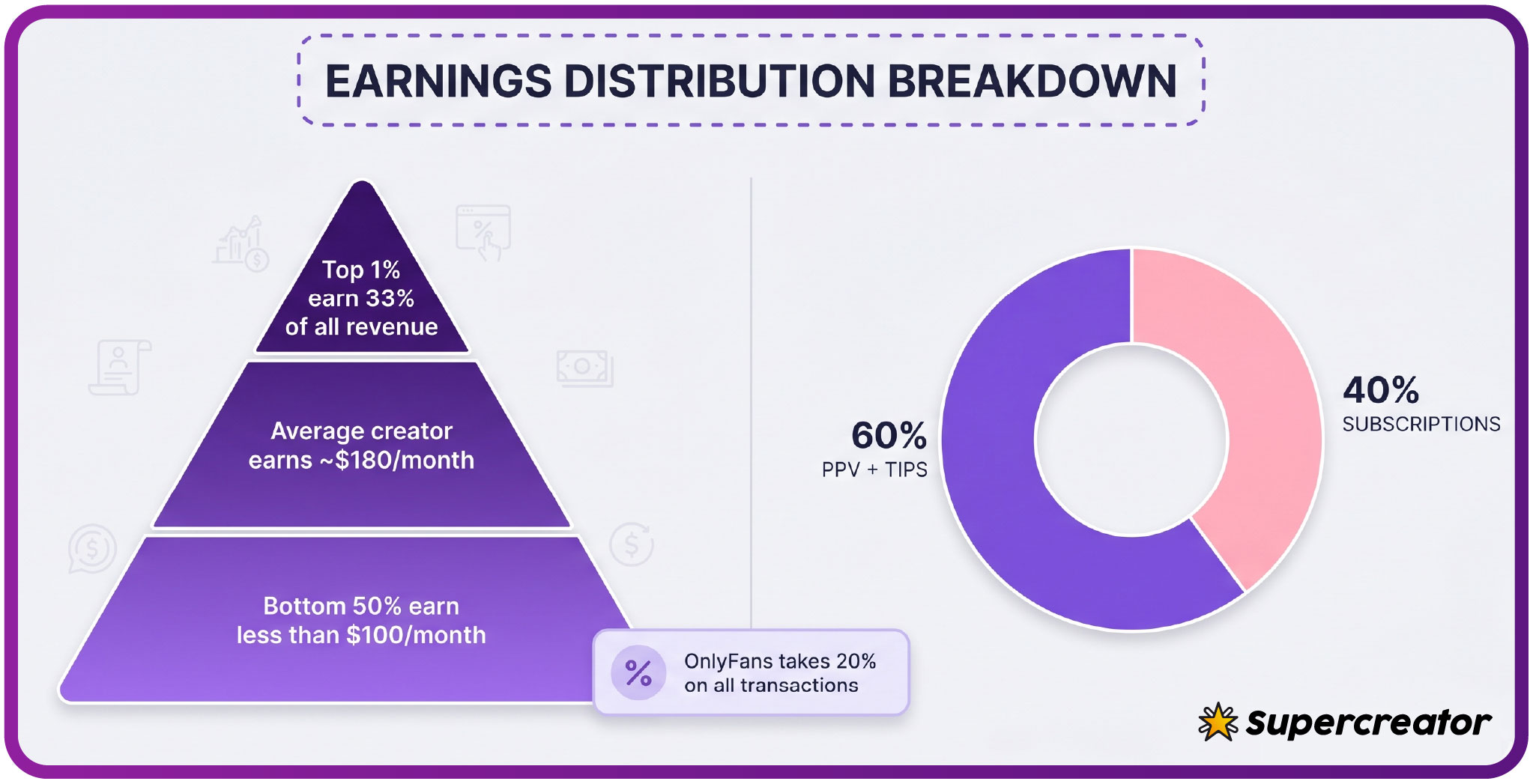
Subscribers rarely leave one at a time. The most common trigger is a price change: when a creator raises the base price, auto-renew stops for everyone affected, and each subscriber then decides whether the new number is worth it.
Each stage produces a visible change in the data that ranking sites collect.
- A price change is published and auto-renew stops for the current base.
- Existing access continues until each paid period ends.
- Exit decisions cluster at the end of those periods rather than instantly.
- Relative position between similar creators reshuffles on updated cards.
- The next cycle settles once new subscribers replace part of the lost base.
This is why a page can look strong one month and weaker the next without any change in content quality. The ranking movement is often arithmetic: a small base lost at once takes longer to rebuild than a large base lost gradually. Subscribers who understand the pattern can usually tell whether a drop reflects the page or reflects a specific billing event.
Exit waves also affect neighboring pages. When one creator’s base scatters, some of those subscribers land on comparable pages in the same category, which lifts the receiving page’s renewal and engagement numbers.
How BestOnlyFans Reads the Pattern
Ranking methodology varies by site, but the public shape is usually the same. A card lists a price, a category, a short price history, an activity stamp, and a last-updated marker. Each field answers a different question a subscriber would otherwise have to guess at.
The brand’s approach at BestOnlyFans follows that structure: collect public signals, timestamp them, and show how recently each one changed. Nothing about the card requires privileged access. It requires consistent collection over time, which is the part most directories skip.
| Card Field | What It Shows | How It Ages |
|---|---|---|
| Listed price | Current base subscription between $4.99 and $49.99 | Accurate until the next price change |
| Category | Content grouping used to compare similar pages | Stable unless the creator rebrands |
| Price history | Past base prices and promotional first months | Gains value as the record lengthens |
| Activity stamp | Most recent posting or engagement window | Loses meaning within weeks if not refreshed |
| Update frequency | How often the card itself was revised | Signals whether the directory is maintained |
Two directories can order the same pages differently without either being wrong. One may weight renewal continuity; another may weight recent activity or price stability.
Subscribers who want the fuller picture can review curated rankings alongside the raw card data. A page described as best onlyfans highest rated by one directory may sit lower on another for reasons that have nothing to do with content. The ordering reflects methodology, not a single objective truth.
What Subscribers Can Learn From the Pattern
Ranking movement is more useful as a decision aid than as a scoreboard. If your own renewal is one of the signals feeding a card, you can use the card to check whether your spending still matches what you get.
- Check whether the page moved since your last billing cycle.
- Read the price history to see if the base price changed.
- Confirm the activity stamp is recent enough to trust.
- Compare two cards in the same category before committing.
- Decide to renew, downgrade to free, or exit at the period end.
A verification hold of $0.10 sits on card checks and is refunded within days, so a payment method change does not have to disturb an active subscription.
Account hygiene matters here too. Two-step authentication on your OnlyFans login protects the payment method attached to every renewal, and card checks are a common target for phishing attempts that imitate billing notices. A ranking card never asks for your password, and no legitimate directory needs your card details to show you a price.

FAQ
Do my renewals actually affect where a page appears on ranking cards?
Individually, no. Collectively, yes. A single renewal is invisible in the data, but the aggregate renewal rate across a base is one of the strongest continuity signals a directory can collect. Pages with steady month-over-month retention read as stable, which tends to hold their position.
How quickly do exit waves show up on external directories?
It depends on collection frequency. A directory that refreshes weekly will catch a cluster within days of the billing periods ending. A directory that updates monthly may show the drop only after the next cycle has already begun to settle.
Why do two ranking sites order the same pages differently?
Because they weight different signals. One may emphasize renewal continuity, another recent activity, and a third price stability. The page data can be identical while the ordering differs, which is why comparing two cards is more informative than trusting one.
Which card fields stay useful when the data is a month old?
Price history and category age well because both change slowly. Listed price and activity stamps decay fastest, since a raise or a quiet stretch can invalidate them within weeks.
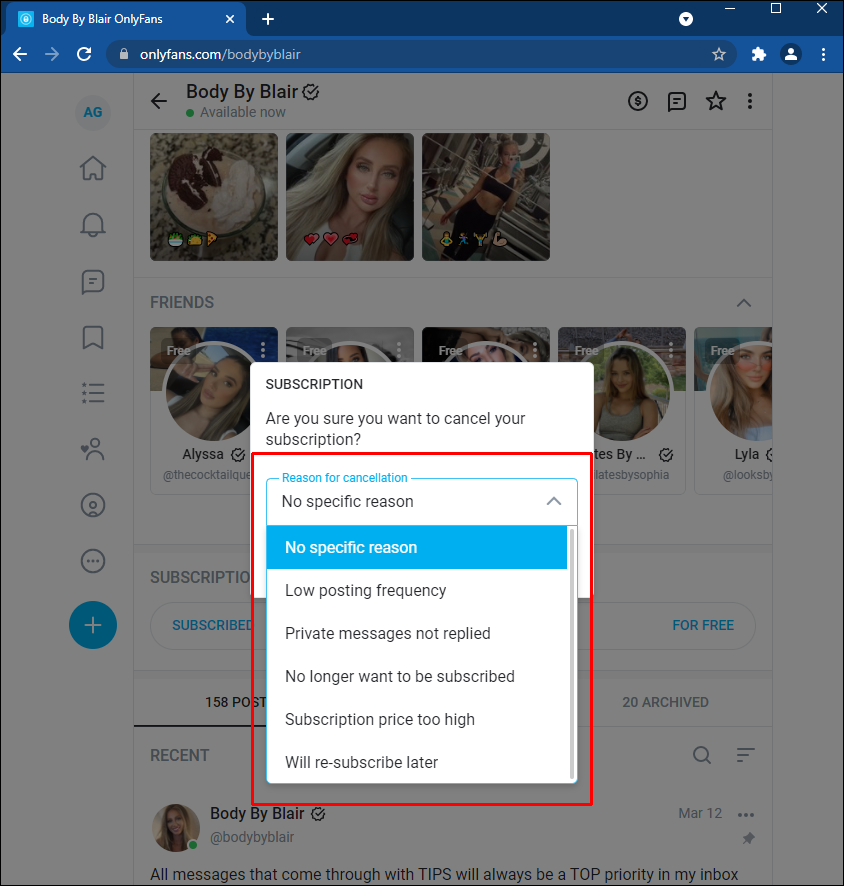
Subscriber habits are not passive inputs. Every renewal, unlock, message, and cancellation becomes part of a record that directories read and republish. Understanding that loop turns a ranking card from a verdict into a tool you can actually use.